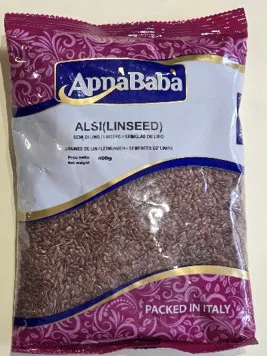
Recall: ApnaBaba ALSI (LINSEED) 400 g linseed over hydrocyanic acid
Recall of ApnaBaba ALSI (LINSEED) 400 g linseed, EAN 050519871235, best before 20.06.2027, over elevated hydrocyanic acid levels.
Products 1
- EAN
050519871235- Date
- 20.06.2027.
The Croatian Inspectorate (Državni inspektorat Republike Hrvatske) informs consumers about the recall of the product Sjemenke lana ApnaBaba, ALSI (LINSEED) 400 g, EAN code 050519871235, best before 20.06.2027, due to elevated levels of hydrocyanic acid.
The product does not comply with Regulation (EC) No 178/2002 of the European Parliament and of the Council of 28 January 2002 laying down the general principles and requirements of food law, establishing the European Food Safety Authority and laying down procedures in matters of food safety.
The supplier is Fresh Tropical Srl by Jawad, Corbetta, Italy, and retail is GORKHAS AND ASSOCIATES d.o.o., Zagreb. The country of origin is India. The notice applies exclusively to the product with the details above.
Consumers should not use this product.
Adios Radar summarises official notices with the help of AI and checks the data, but the source's original notice is authoritative.
Similar notices
All notices Recall
NATUR PUR BIO whole flaxseeds over elevated hydrocyanic acid
Recall of NATUR PUR BIO SJEMENKE LANA cijele 300 g, EAN 9100000830834, LOT 25343S0425, best before 31.12.2026, over elevated hydrocyanic acid content.
Linseed with elevated hydrocyanic acid level (228 mg/kg)
EU alert RASFF 2026.5020: linseed (400 g, best before 20/06/2027) contains 228 ± 50 mg/kg hydrocyanic acid, above the 150 mg/kg limit. Distributed to Croatia, where a consumer recall was issued.
NATURA linseed 150 g over elevated hydrocyanic acid level
Recall of Lan sjemenke (linseed), 150 g, NATURA, LOT 228LP4, best before 16.11.2024, due to elevated hydrocyanic acid levels.
Organic flax seeds over too high cyanide content
RASFF notification 2026.5011: organic flax seeds (300 g, LOT L25343S0425, BBD 12.2026) from Kazakhstan recalled as cyanide is 213 mg/kg, above the 150 mg/kg limit.